
The thrill of discovering a forgotten, neglected project car tucked away in a dusty barn, an overgrown backyard, or a local salvage auction is an experience every automotive enthusiast understands. Where average drivers see a rusted shell with flat tires and a seized engine, a true builder sees potential. They see classic body lines waiting for a mirror finish, a mechanical setup ready to roar back to life, and a future head-turner at weekend car shows.
However, bridging the gap between a beaten-up project vehicle and a pristine showroom treasure requires far more than enthusiasm and a socket set. A successful restoration demands a clear vision, disciplined budget allocation, a logical sequence of work, and the willingness to enlist specialized trade professionals when a task exceeds home garage capabilities. By approaching your build with systematic planning—from initial structural assessment to the final coat of wax—you can navigate the inevitable roadblocks and transform a forgotten vehicle into a masterpiece.
Here is a comprehensive, step-by-step roadmap to guide your project car build from start to finish.
1. Assess Hidden Structural Damage and Source Rare Components Efficiently
Conduct a Systematic Structural and Metal Inspection
Before spending your hard-earned money on shiny aftermarket wheels or performance upgrades, you must conduct a thorough, honest evaluation of the vehicle’s structural foundation. Cosmetic flaws like faded paint or torn seats are easy to fix, but severe structural rot or a twisted frame rail can destroy your budget before the build even gets off the ground.
Elevate the vehicle securely on jack stands and inspect the floor pans, rocker panels, subframe mounting points, and trunk floor. Use a magnet across lower body panels to detect thick layers of plastic body filler masking severe rust or past impact damage. Check wheel wells and suspension mounting towers for stress cracks. Identifying these structural challenges early allows you to construct a realistic budget and determine whether the chassis requires professional frame alignment or panel replacement before mechanical work begins.
Source Hard-to-Find Replacement Parts Smartly
Restoring a damaged or discontinued vehicle often means searching for parts that are no longer produced by original equipment manufacturers. Finding trim pieces, glass channels, door handles, and interior brackets requires creative sourcing strategies.
To keep your project budget intact while hunting down hard-to-find components, implement these sourcing strategies:
- Build relationships with local yards specializing in auto recycling to locate original rust-free body panels, rare trim pieces, and factory hardware.
- Join model-specific enthusiast forums and digital registry groups where members trade original surplus parts and rare factory inventory.
- Save original, broken, or worn components to use as physical templates if custom fabrication or metal shaping becomes necessary.
- Attend regional automotive swap meets with a detailed measurement list and calipers to verify dimensions before buying vintage parts.
If your project car arrived without keys, features jammed lock cylinders, or suffers from an immobilized security module, hire specialized automotive locksmiths to rekey door lock barrels and match the ignition switch. Resolving key and tumbler issues early ensures you can securely lock the vehicle during transport and storage throughout the build.
2. Rebuild Core Mechanical Systems for Reliability and Smooth Power Delivery
Diagnose and Rebuild Specialized Powerplants
With the chassis evaluated, turn your attention to the mechanical heart of the vehicle. An engine that has sat idle for years requires careful revival steps to prevent internal damage on its first startup. Never attempt to turn over a long-quarantined engine without first manually rotating the crankshaft and replacing degraded fluids.
Remove the spark plugs or glow plugs and squirt fogging oil directly into each cylinder to lubricate dry cylinder walls and rings. Flush out stale, varnished fuel from the gas tank, replace all rubber fuel lines, and install a fresh oil filter. For projects powered by high-torque or specialized platforms—such as servicing heavy-duty diesel engines—inspect turbocharger shaft play, evaluate glow plug resistance, and clean out soot-choked intake manifolds. Replacing aged cooling hoses, thermostat units, and water pumps prevents immediate overheating issues once the engine fires up.
Overhaul Gearboxes and Drivetrain Components
A powerful, smooth-running engine is useless if the power cannot reach the rear wheels efficiently. Transmissions that have sat unused often suffer from dried-out rubber seals, contaminated fluid, or hardened internal clutches that slip under load.
Drain the transmission pan and inspect the magnet for heavy metal shavings or brass glints that indicate synchro failure. Partnering with a trusted shop specializing in local transmission repair ensures that worn torque converters, slipping clutch bands, or notched manual gear synchronizers are completely overhauled before reinstalling the powertrain. Furthermore, inspect the driveshaft universal joints, replace leaking differential pinion seals, and repack wheel bearings with fresh grease to guarantee vibration-free cruising.
3. Handle Specialized Foreign Engineering and Custom Exhaust Systems
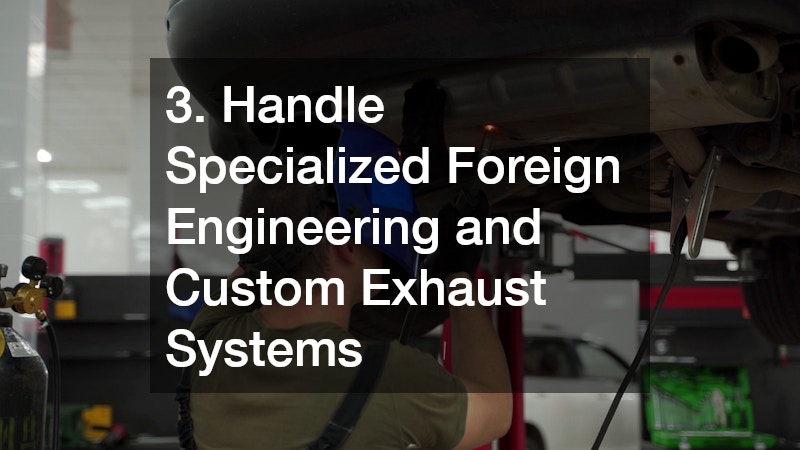
Master Complex Import Engineering and Wiring
Restoring European or foreign sports cars presents unique engineering challenges. Complex overhead camshaft configurations, delicate vacuum-operated accessories, dual-clutch setups, and intricate electrical schematics demand patience and precise mechanical techniques.
When restoring vintage or modern import project cars, consulting experts in European auto repairs can save you dozens of hours of trial-and-error troubleshooting. Specialized mechanics possess the proprietary factory tools, metric shims, and diagnostic software needed to set complex engine timing, adjust mechanical fuel injection systems, or code replacement electronic modules. Taking time to trace brittle, corroded factory wiring harnesses and replacing compromised ground straps eliminates ghost electrical faults that frequently plague older import builds.
Fabricate Custom Performance Exhaust Systems
An engine needs to exhale efficiently to produce optimal power and deliver a satisfying exhaust note. Factory exhaust systems on project cars are frequently rusted through, crushed by floor jack abuse, or restricted by outdated catalytic converter designs.
Schedule a custom exhaust repair or full system overhaul to weld up fresh mandrel-bent stainless steel piping from the headers back. Upgrading your exhaust setup yields significant benefits:
- Eliminates dangerous carbon monoxide leaks caused by cracked manifold flanges or pinholed exhaust pipes.
- Maximizes engine horsepower and torque output by reducing restrictive backpressure in the exhaust flow.
- Improves ground clearance on lowered project cars by tucking exhaust piping tight against the floor pans.
- Tunes the vehicle’s exhaust tone using high-flow performance mufflers to achieve a deep, vintage rumble without highway drone.
4. Fix Frame Deformities and Achieve a Flawless Mirror Paint Finish

Execute Precision Metalwork and Panel Realignment
With the mechanical systems operating reliably, it is time to transform the vehicle’s exterior appearance. Achieving show-quality panel gaps and laser-straight body lines requires patient metalwork rather than slapping layers of body filler over damaged metal.
Send crumpled quarter panels, bent frame horns, and misaligned core supports to a reputable local collision repair shop equipped with a hydraulic frame alignment rack. Specialized technicians can pull the chassis back to exact factory dimensions, ensuring that doors, hood hinges, and trunk lids align effortlessly. Once the main structure is square, hammer and dolly minor dent damage, weld in fresh patch panels over past rust spots, and grind welds smooth to create a seamless metal surface.
Prepare Bodywork and Apply Flawless Topcoats
Paintwork is eighty percent preparation and twenty percent spraying. Any minor flaw, sanding scratch, or uneven contour left on the primer coat will be amplified ten times over once the glossy clear coat is applied.
Rely on professional auto body services for multi-phase block sanding using progressively finer grit sandpaper. Applying high-build epoxy primers seals the raw metal against future corrosion while allowing you to guide-coat and block sand the panels until they are perfectly flat. Once the body is prepped, spray a color-matched basecoat inside a climate-controlled, downdraft paint booth, followed by multiple coats of high-solids clear coat. After the paint cures, wet-sand the clear coat with micro-fine sandpaper and machine-polish the finish to eliminate orange peel and reveal a deep, mirror-like shine.
5. Overhaul Electrical Architecture and Reconstruct Custom Cabin Interiors
Restore Vintage Wiring and Modernize Electronic Controls
Old project cars almost always suffer from neglected electrical systems. Decades of previous owner modifications, brittle insulation, spliced wires, and corroded fuse boxes create intermittent shorts that can ruin new components or pose serious fire risks.
To ensure your vehicle’s electronics function safely and reliably, follow these cabin electrical overhaul steps:
- Remove hacked, non-factory wiring splices and replace degraded factory looms with brand-new reproduction wiring harnesses.
- Modernize outdated glass-tube fuse blocks by installing modern blade-style fuse panels equipped with integrated circuit relays.
- Clean all chassis ground connections down to bare metal to eliminate flickering gauge clusters and dim exterior lights.
- Test all dashboard switches, wiper motors, heater cores, and climate control vacuum actuators before assembling the interior dash panel.
Reupholster Cabin Surfaces and Rebuild Ergonomics
Step into any high-end automotive show, and you will notice that judges evaluate the cabin with as much scrutiny as the exterior paint. A worn steering wheel, sagging headliner, or cracked vinyl dashboard immediately detracts from the quality of an otherwise immaculate build.
Strip the interior down to bare floorboards and apply heavy-duty sound-deadening mats across the transmission tunnel, floor pans, and inner door cavities. Installing acoustic thermal insulation keeps road noise to a minimum and prevents exhaust heat from warming the cabin during long drives. Replace degraded seat foam bolsters before stretching new leather or factory-correct cloth upholstery over seat frames. Rebuilding door panels, wrapping damaged dashboards, installing fresh carpet kits, and installing period-correct gauges create a clean, comfortable driver cockpit that matches the quality of your vehicle’s exterior finish.
6. Install Pristine Glass, Custom Window Tinting, and Final Showroom Details
Replace Aged Glass and Restore Weather Seals
Nothing ruins a fresh, high-end paint job faster than pitted, cracked original glass surrounded by cracked, dry-rotted rubber weatherstripping. Fresh glass provides crystal-clear road visibility while ensuring your restored cabin stays completely sealed against wind noise and rain.
Contract a specialized local auto glass company to remove old windshields and backlights without scratching your fresh paintwork. Installing new laminated safety glass along with soft factory-style rubber seals creates an airtight barrier that protects your interior investment. While the glass is being replaced, overhaul the interior door window regulator tracks, replace worn nylon rollers, and lubricate glass channels so the side windows slide up and down smoothly.
Protect Your Cabin and Complete Show-Ready Detailing
The final stage of a project car build is where all your hard work comes together into a cohesive, breathtaking automobile. Upgrading and protecting the interior cabin creates an inviting environment that complements the mirror-finish exterior.
Applying professional car tinting to your fresh side and rear glass offers crucial advantages for a completed build:
- Blocks harmful ultraviolet rays from fading expensive leather dashboards, custom suede headliners, and delicate vinyl upholstery.
- Reduces interior cabin temperatures significantly during hot summer car shows and outdoor cruises.
- Increases driver privacy and conceals valuable aftermarket audio systems or custom interior fabrication work.
- Gives the vehicle’s exterior profile a sleek, finished appearance that ties together the paint and brightwork.
To complete the transformation, execute a meticulous detailing pass across the entire vehicle. Polish stainless steel trim and chrome bumpers to a mirror shine, dress all engine bay rubber hoses, clean out suspension component threads, and install fresh period-correct emblems and badges. Scrub the interior leather, apply crisp carpet floor mats, and step back to appreciate your show-ready creation.
Additionally, ensure that all windows and mirrors are spotless for optimal visibility, reflecting the quality of your hard work. Check the tire pressure and ensure they shine with a fresh coat of tire dressing, adding that final touch of polish. Finally, if you have the time, consider taking it for a gentle drive to feel the smoothness of the newly restored ride, celebrating the culmination of your efforts.
Conclusion
Transforming a damaged, neglected project car into a showroom treasure is one of the most rewarding journeys any car enthusiast can undertake. It tests your patience, sharpens your problem-solving skills, and requires a balance between hands-on DIY grit and smart trade collaboration.
By systematically evaluating the chassis, overhauling the powertrain, executing precise metalwork, applying professional paint, and finishing with clean glass and interior details, you turn an abandoned machine into a proud piece of rolling art. Set a realistic budget, take the process step-by-step, and enjoy the unmatched pride that comes with turning your project car dream into reality.